Free Duo 10 Day: One sensor to monitor glucose and ketones
Free Duo 10 Day continuously follows glucose and ketones with a single sensor. This is its operation, limitations and availability in Canada.
Continuous glucose sensors reduced the number of measurements at fingertips. When monitoring ketones, however, diabetics still have to use a separate urinary stripe or blood reader.
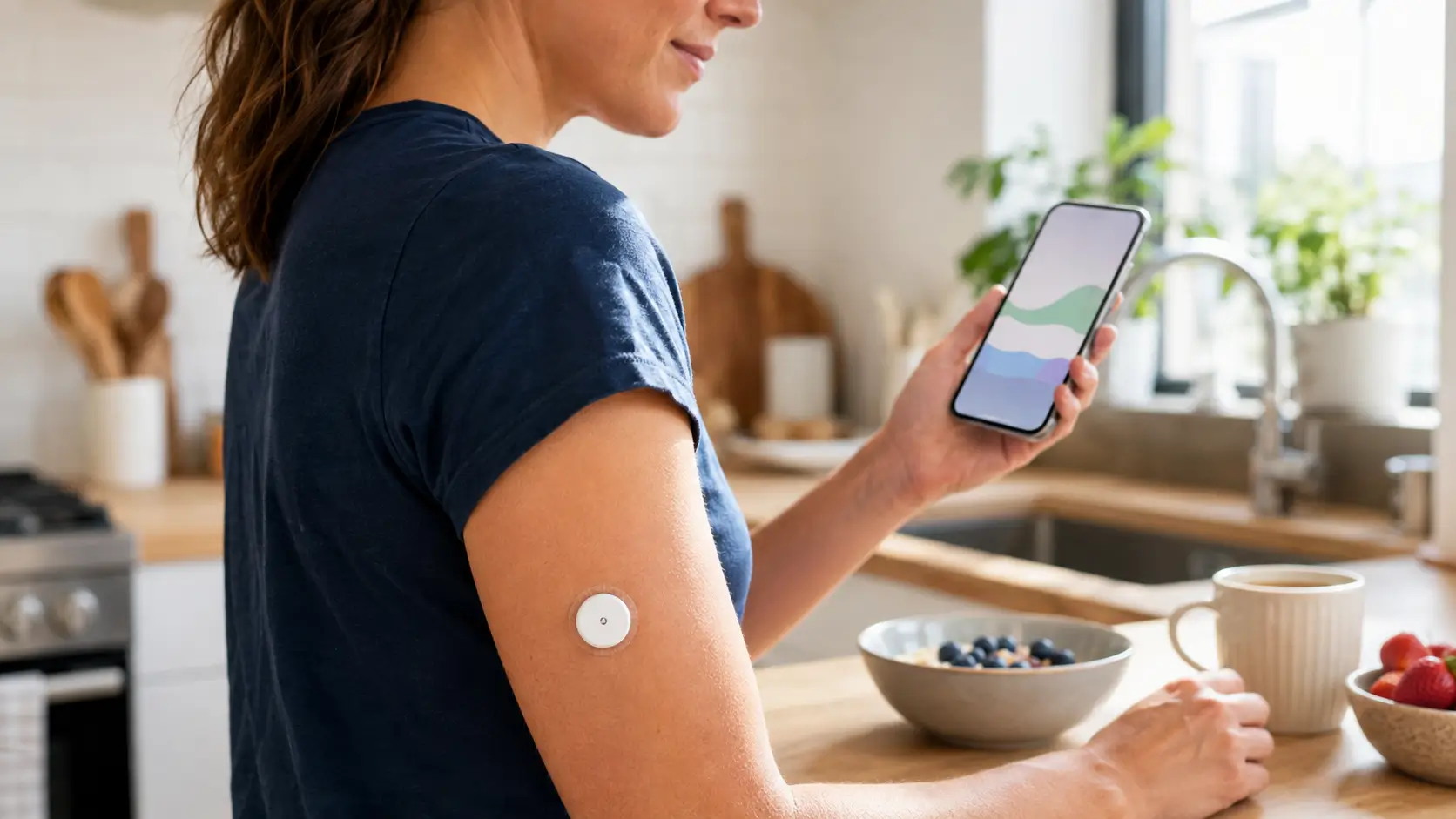
Abbott wants to combine these two measurements with Libre Duo 10 Day, a small sensor carried on the arm and authorized in the United States on August 25, 2026.
It can report an increase in ketones, but does not predict an emergency perfectly and does not replace the guidelines given by a health professional.
Two measurements in the liquid under the skin
A filament inserted just under the skin measures the concentration of glucose and ketones in the interstitial liquid. The sensor transmits a new reading every minute to the compatible Free app.
Ketones appear when the body uses more fat as a source of energy. In a diabetic person who does not have enough insulin, their accumulation may cause diabetic ketoacidosis, or ACD, a potentially fatal complication.
A point measure indicates the concentration at a specific time. Continuous monitoring adds direction and speed of change.
The FDA explains that Libre Duo measures both markers day and night and can detect an increase in ketones before ACD appears. This ability does not guarantee that each episode will be identified early enough.
For adults and children from two years old
The U.S. authorization covers people with diabetes two years of age or older. The sensor is especially intended for people using insulin or certain medicines that may increase the risk of high ketones.
The FDA used its De Novo procedure, reserved for devices of a new type with a low or moderate risk and for which special controls can be established.
The evaluation included six studies and over 600 participants. According to the FDA, the results submitted by Abbott demonstrated a sufficiently accurate measure of clinically relevant ketone differences during the port period.
However, there is a need to distinguish between regulatory review and independent publication. The data have been provided by the manufacturer, and the detailed results of each study are not yet readily available in a peer-reviewed publication.
Ten-day announcement, not always achieved
Free Duo is designed to be worn for up to ten days. The labelling published by Abbot reveals, however, that 84.1% of the sensors used by adults and 68.8% of those carried by children worked throughout this period.
Approximately 16 per cent of sensors in adults and 31 per cent in children could therefore detach or stop operating before day 10. These results are derived from the manufacturer's tests.
The application displays trends and can transmit alerts. Notifications require a compatible phone, activated alarms and a barrier-free distance of about 10 m between the sensor and the playback device.
LibreView will share some data with professionals, while LibreLinkUp targets caregivers.
Compatible pumps will come later
When launching, it should not be assumed that Libre Duo can order all insulin pumps.
Abbott provides compatibility with Beta Bionics and Sequel Med Tech's iLet and twiist systems before the end of 2026. Integrations with Insulet and Tandem are announced for 2027, while a separate collaboration is planned with MiniMed.
These deadlines are objectives of the manufacturer. The availability of each combination will depend on software, regulatory authorizations and the market.
Reuters summarizes the functions and integrations announced.
Prices and availability in Canada
Abbott plans to launch Libre Duo 10 Day in the United States before the end of 2026. The company also has a European CE mark for its Free Duo range, which does not automatically mean that the product is sold in all European countries.
No prices were reported. The potential cost may vary depending on the number of sensors, pharmacy, insurance, public program, promotion and region.
No authorization, launch date or Canadian pricing specific to Free Duo 10 Day is confirmed. Other Free Devices already licensed in Canada do not automatically make this new model eligible.
Limits or Considerations
Urgent alarms may miss some episodes of glucose less than 3.1 mmol/L or ketones greater than 3.0 mmol/L.
Abbott recommends using glucose at the fingertips when readings or alarms do not match symptoms or expectations. Ketone data should be interpreted with glucose data.
A sensor cannot alone determine the cause of an increase or choose the appropriate treatment. A telephone failure, a deactivated alarm, a pick-up sensor or a interrupted communication may delay the warning.
Free Duo should therefore not be presented as an absolute protection against ketoacidosis or as a replacement for a medical emergency plan.
Conclusion
Free Duo 10 Day adds a second important function to the glucose sensor: continuously follow ketones without requiring a separate device.
This combination could give people with diabetes, parents and caregivers better visibility on a complication that can progress rapidly.
US authorization confirms that the concept has reached a serious regulatory stage. Its real value will now depend on the price, the reliability of the sensors, the integrations with the pumps and the results obtained after its marketing.