AUTUS: a heart valve that can expand with the child
The AUTUUS valve can be expanded as a child grows. This is how it works, the first results, its limitations and its availability in Canada.
A child who receives an artificial heart valve doesn't necessarily keep the same heart size all his life. So far, its growth could lead to other open core operations to replace a valve that has become too small. A new lung valve tries to break this cycle by being able to be expanded after implantation.
On October 1, 2026, the U.S. Food and Drug Administration (FDA) approved Edwards Lifesciences AUTUS valve for some children with congenital lung valve disease. It is the first licensed heart valve in the United States that is specifically designed to be expanded as the child grows.
A small valve that changes in diameter
The lung valve controls the passage of blood between the right ventricle and the lungs. When it is absent, too narrow or damaged, the heart may have difficulty delivering blood to the lungs or letting blood flow.
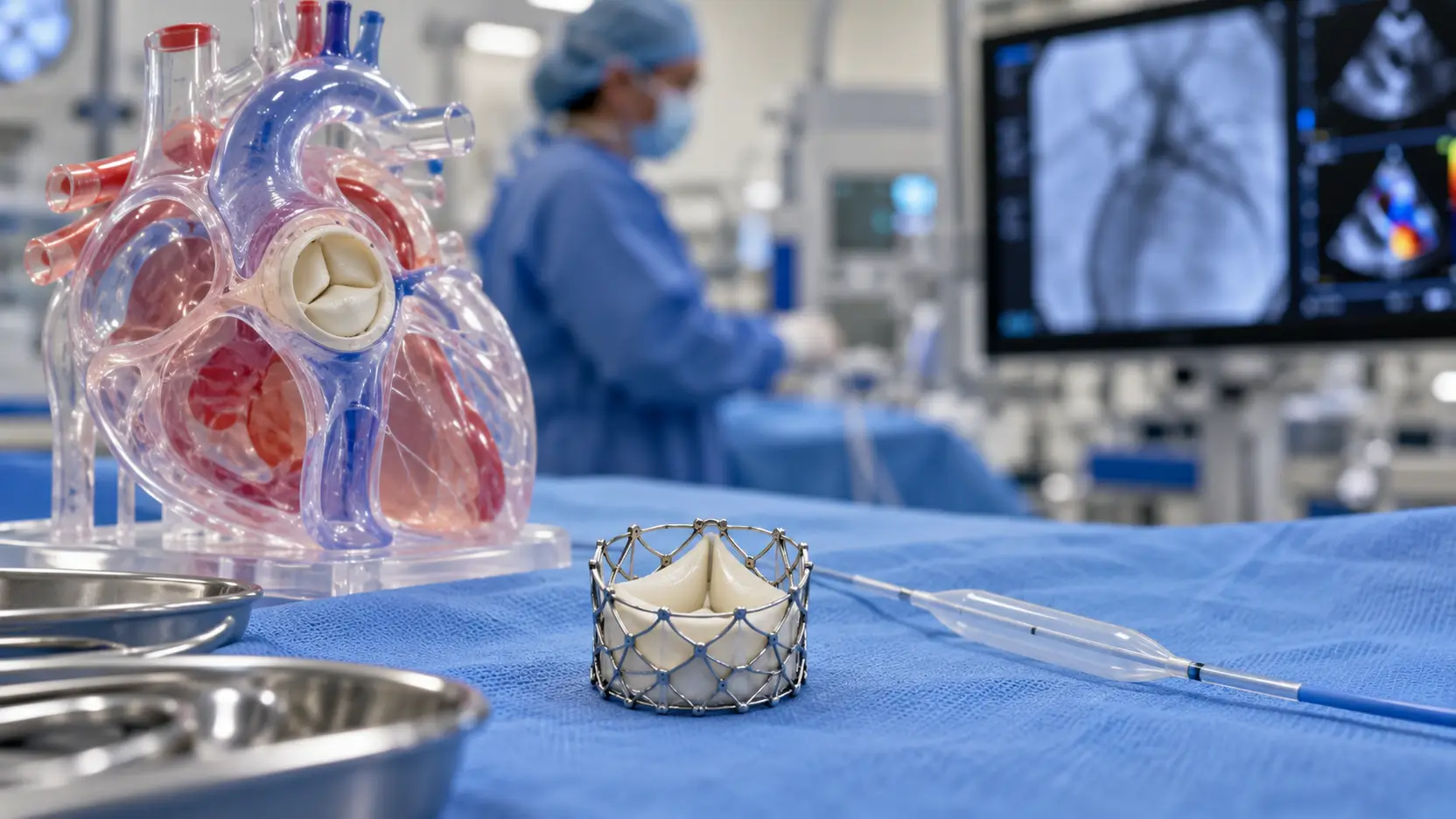
AUTUS must first be sewn into the heart during open surgery, such as a conventional replacement valve. Its advantage appears later: a cardiologist can introduce a catheter through a vein of the leg, place a small ball in the valve and inflate it in order to enlarge its metal structure.
According to the [FDA] (https://www.fda.gov/news-events/press-announcements/fda-approves-first-heart-valve-designated-grow-children), the device can be installed at about 13 mm in diameter, a size suitable for a young child, and up to 22 mm. The frame shortens as it expands, while the three sheets continue to join to close the passage.
This expansion does not make the fabric grow like a natural valve. Rather, it is an adjustable prosthesis, enlarged by a separate procedure under catheter. It could thus delay or avoid certain open heart operations, without guaranteeing that a child will never need another valve.
Synthetic sheets rather than animals
AUTUS is also the first FDA-approved valve whose sheets are made of polymer rather than animal tissue. The [New York-Presbyterian Hospital] (https://www.nyp.org/advances/article/pediatric-cardiology/fda-approves-new-size-adjustable-surgical-pulmonary-valve-for-pediatric-patients), which participated in the trials, describes a stainless steel structure and synthetic sheets inspired by the geometry of venous valves.
Traditional biological valves can calcify and deteriorate faster in children. The synthetic material aims to offer another option, but its true durability will have to be demonstrated over several years. A follow-up year cannot predict its condition after 10 years or after several expansions.
Encouraging results, still limited
Approval is based on a prospective study of 62 children in 12 American centres. The first 60 patients assessed at six months had acceptable blood flow and at most mild leakage. The FDA reported no deaths, stroke or clots during this period.
There were, however, problems: three frames fractured and two patients experienced reduced mobility of one sheet, with no symptoms reported. In two children who were starting to exceed their valve capacity, the yield deteriorated; The two devices were then successfully expanded by catheter.
The specialized media TCTMD noted that there was no control group in the trial. Edwards states that all patients who completed the one-year follow-up met the advertised performance criteria, but this data is from the manufacturer. Annual monitoring should continue for 10 years.
Availability and Cost
U.S. authorization is pre-market approval for a Class III device, the FDA's most demanding regulatory route. It does not mean that the valve is suitable for all children or that it is immediately offered in each hospital.
Edwards did not publish any awards for AUTHUS. The actual cost will also depend on surgery, hospitalization, fees, follow-up and possible catheter expansions. It is not a product sold directly to families.
No Canadian registration or date of launch in Canada was confirmed in the sources consulted. FDA approval does not automatically make the device available in Quebec or elsewhere in the country.
Limits or Considerations
AUTUS replaces only the lung valve in selected paediatric patients; It is not a universal valve for all heart diseases. The first implantation always requires open heart surgery, and every expansion requires a specialized medical procedure.
The data relate to a small group, without direct comparison with a traditional valve. Frame fractures, reduced movement of certain leaves, possible clot formation, infection, leakage and durability after several dilatations should be monitored.
Conclusion
AUTUS does not grow biologically with the child, but its structure can be extended from 13 to 22 mm without new open surgery. This difference could reduce part of the heavy operating path associated with congenital heart disease.
The idea is convincing and the first results have sufficed for American approval. However, the real measure of progress will come from long-term monitoring: how many operations will be effectively avoided, how many expansions will remain possible, and how long the synthetic slips will continue to work.