InspirePRO wants to make the visual field test more mobile
InspirePRO transforms the visual field test into a portable glaucoma test, but price, validation and Canadian status are yet to be confirmed.
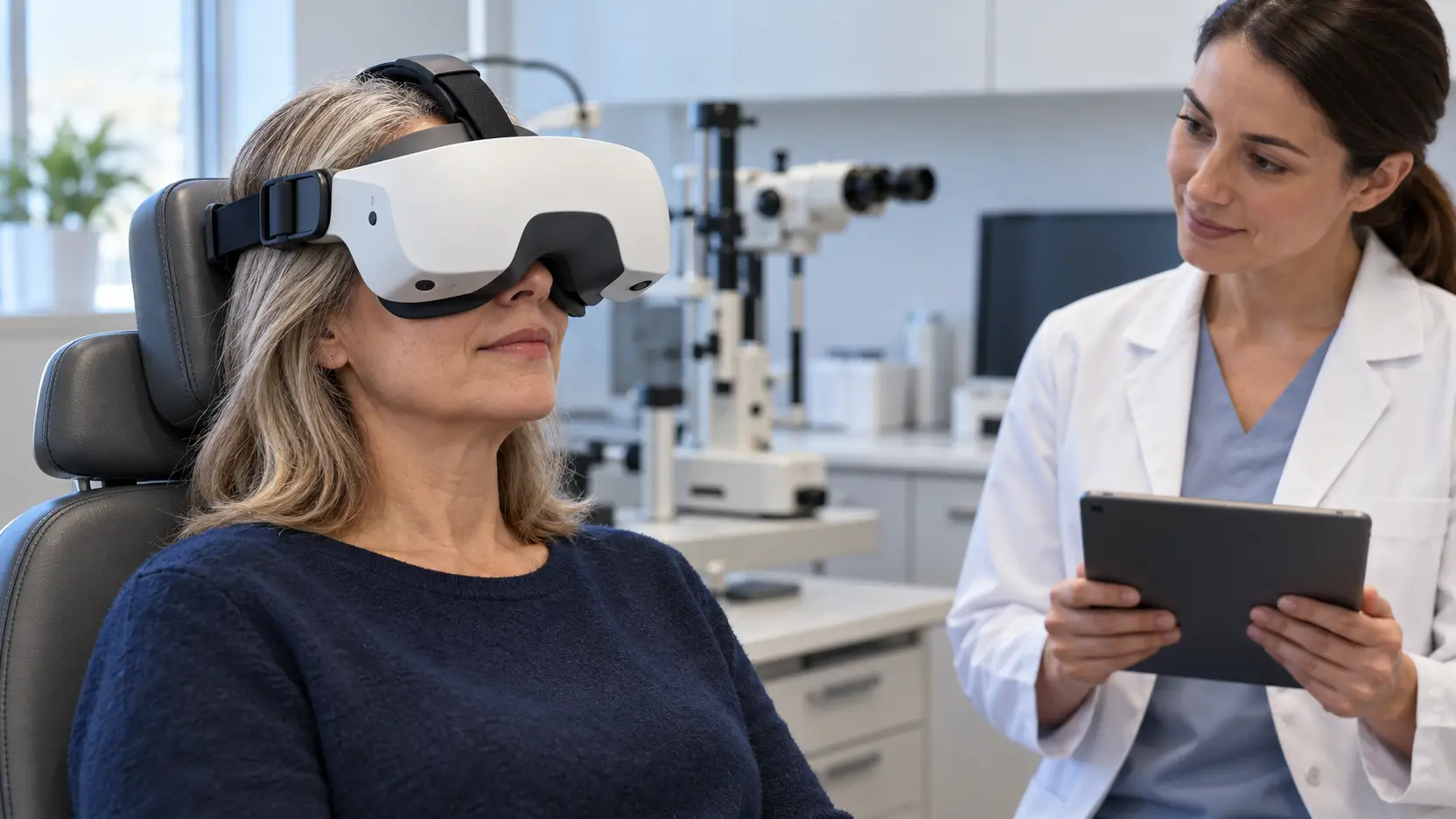
A medical helmet announced on 9 October could help clinics measure the visual field without immobilizing a room around a large machine. Named InspirePRO, the RadiusXR device and Topcon Healthcare aims to track glaucoma from its first signs to advanced damage. The promise is interesting, but the price, availability and independent data on this new model remain unknown.
Why measure the visual field?
Glaucoma damages the optic nerve and can evolve long without obvious symptoms. Loss often begins in peripheral vision. According to the [National Eye Institute] (https://www.nei.nih.gov/eye-health-information/eye-conditions-and-diseases/glaucoma), a complete examination can therefore include a visual field test: the person fixes a point and reports the lights that she perceives around it.
This test, called perimetry, does not replace eye examination, pressure measurement or optical nerve imaging. Rather, it produces a functional map of what the patient sees. Repeated over time, it helps the professional identify a deterioration.
Traditional perimeters usually use a dome in front of which the patient must remain well positioned. A portable device could free up space, move from room to room and facilitate some examinations in a satellite clinic. However, it remains an instrument for professionals, not a home diagnostic helmet.
What InspirePRO changes
RadiusXR and Topcon presented InspirePRO at the annual conference of the American Academy of Ophthalmology in New Orleans. The helmet brings together in one device the display, the optical, the look tracking and the clinical software.
The apparatus weighs 358 g and allows an independent adjustment of −7 to +3 diopters for each eye, according to the RadiusXR public file. It also includes an adjustment of the gap between pupils, modular light joints and speakers designed to mitigate environmental distractions.
The manufacturer states that its screen is 30 times brighter than that of the nearest portable competitor and that its eye tracking is the fastest in its category. These comparisons were not accompanied by a public protocol or an independent trial. They should therefore be treated as manufacturer statements, not as established results.
From early to advanced disease
The central point of the announcement is the measuring range. The previous Inspire model mainly covered screening and mild to moderate damage; Review of Optometry reports a range of stimulus from 15 to 40 dB. InspirePRO is presented as capable of using the background brightness of conventional perimetry and also measuring the deeper deficits associated with advanced glaucoma.
If this capacity is confirmed in practice, a clinic could use the same portable system for more patients instead of maintaining a standing perimeter for severe cases. However, neither the company nor the specialised media published a complete comparative study against a reference device when writing these lines.
Prices, availability and Canada
RadiusXR did not release no prices, no configuration range and no general delivery date. The advertisement invites clinics to request information from the manufacturer or distributor. The final cost could vary depending on hardware, software, services, region and purchase terms.
In Canada, Health Canada lists a Class II active licence, number 111490, for the RADIUS platform and certain RadiusXR helmets, controllers and software. However, the public profile consulted does not name InspirePRO. Therefore, this existing licence alone does not confirm that the new model is already licensed or offered here.
Limits or Considerations
The new helmet has not yet been tested independently. Detailed data on its dynamic range, repeatability, compatibility with clinical records, data storage and recurrent costs are not public. Its comfort over long sessions and performance in patients with special needs will also need to be checked in real-life conditions.
Finally, portability does not automatically guarantee better access to care. Trained personnel, clinical interpretation and a follow-up course are always required when the test detects an anomaly.
Conclusion
InspirePRO proposes a credible evolution: to transform an examination traditionally linked to a fixed machine into a portable clinical tool covering, according to its manufacturer, the entire progression of glaucoma. Its weight and settings are documented, but its real value will depend on independent testing, transparent pricing and regulatory confirmation for each market, including Canada.