EnerVenue industrializes a nickel-hydrogen battery without lithium
EnerVenue industrialises a nickel-hydrogen battery without lithium. Here is its functioning, its promises, its production and its current limitations.
Nickel-hydrogen batteries have accumulated decades of experience in space, including on board satellites. However, their cost and congestion have long distanced them from terrestrial electricity networks.
EnerVenue is now trying to change the scale. The US company started a production line in Changzhou, China, on 24 September 2026 to manufacture its nickel-hydrogen aqueous cells for stationary storage.
This transition to industrial manufacturing is concrete. However, it does not yet demonstrate that the technology will reach its lifespan, price or performance promised in large commercial projects.
An old chemistry suitable for terrestrial storage
A nickel-hydrogen cell stores energy using an electrode of nickel, hydrogen and aqueous electrolyte. Space models were robust, but used expensive pressure tanks.
EnerVenue claims to have reduced this cost with a simplified architecture including steel, nickel, fibreglass and water-based electrolyte. Its fourth generation cell has a rated capacity of 3 kWh and does not contain lithium or rare earth, according to the manufacturer.
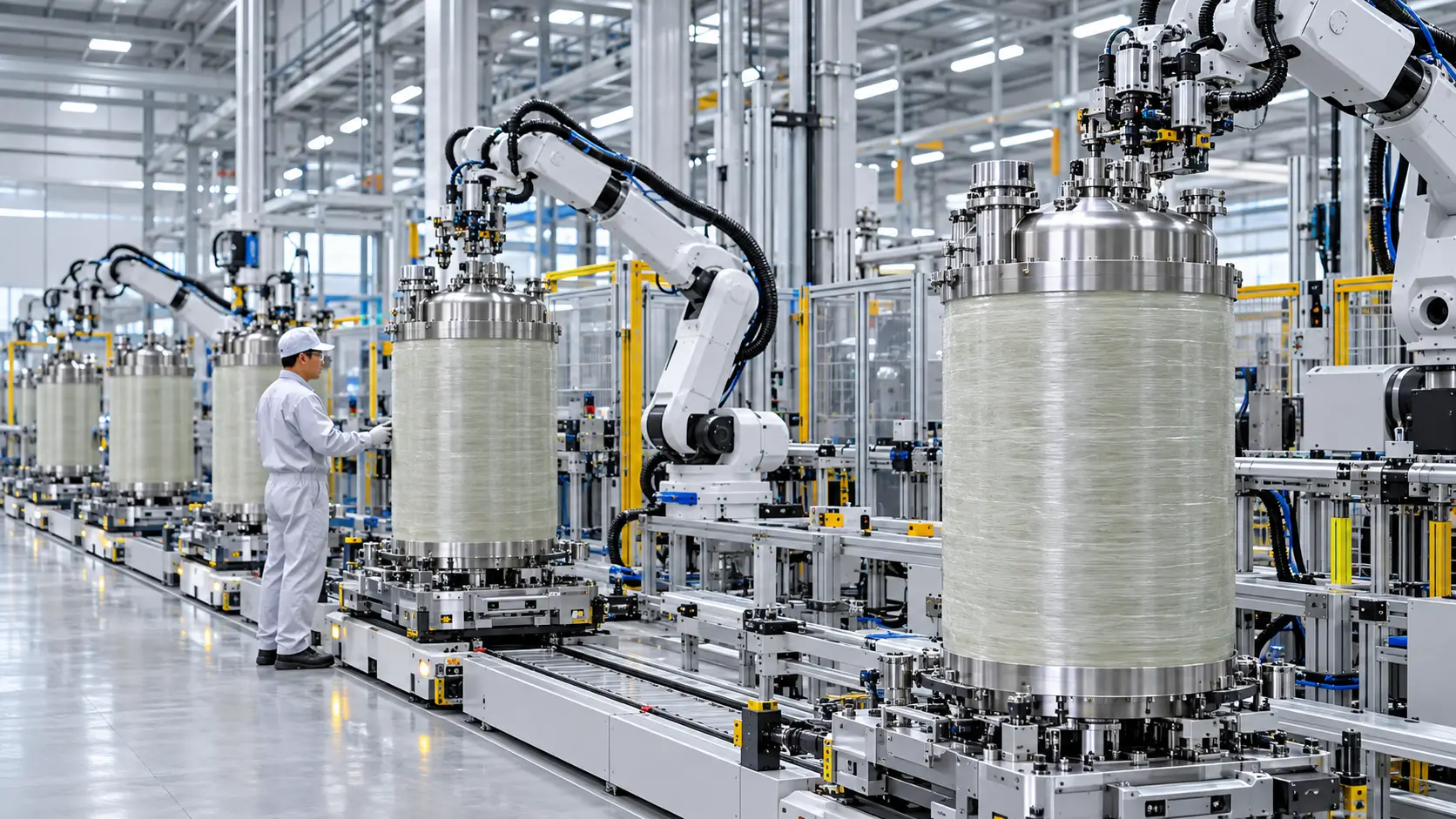
The new plant uses machines specially designed for this architecture. Robots assemble electrodes, wrap fiberglass around cells and move components between stations. Each cell must undergo 41 controls spread over 11 stations, reports EV Charging Magazine.
A 250 MWh plant that still needs to accelerate
The first phase of the plant has a nominal capacity of 250 MWh per year, about 300 cells per day at full speed. It is automated at around 95% and is expected to gradually reach its pace by November.
Reuters reports that EnerVenue wants to increase its annual capacity to 1 GWh in the third quarter of 2027 and then open other plants from 2028. These objectives do not correspond to an already constructed capacity.
The initial production must supply four formats: a 30 kWh module, a 108 kWh block, a 150 kWh cabinet and a 1 MWh container.
A first 150 kWh system has been operating since November 2025 in a Towngas facility in Changzhou. It stores renewable electricity and supports the charging of electric buses. The operational decline therefore remains less than one year for this generation.
#30,000 cycles announced
EnerVenue claims a nominal duration of 30,000 complete cycles, with more than 80% of remaining capacity, as well as a 30-year design term. This could allow up to three daily cycles under certain conditions.
However, the energy Rack of 150 kWh (https://www.energy.com/product/energy-rack) has a return efficiency of more than 87% at 25 °C. Part of the electricity is therefore lost at each charge and discharge, as with any battery.
This cabinet weighs about 5,000 kg. Technology targets buildings, data centres, industries and electrical networks, not vehicles where mass and volume are critical.
Water chemistry does not follow the same thermal packaging mechanism as lithium-ion batteries. The manufacturer reports UL 9540A tests without fire propagation at the cell level. This does not automatically exempt a facility from complying with local codes, conducting a risk analysis or obtaining its authorizations.
Orders, but not yet a long business experience
EnerVenue announced an order of 11 MWh including 26 containers for a Chinese oil field. The first three are to be shipped in December 2026 and the others in March 2027. The customer, the output power and the date of commissioning were not revealed.
Memoranda of understanding signed with other companies during the opening of the plant indicate a commercial interest, but do not constitute firm orders.
Prices and availability in Canada
EnerVenue does not publish prices per cell, per kilowatt hour or for its four systems. Costs will vary depending on capacity, power, inverter, installation, transportation, certification, contract and region.
The company mentions commercial projects or discussions in Canada, without identifying any Canadian customer, operational facility, distributor or tariff. Therefore, it should not be assumed that products can already be ordered and installed across the country.
Limits or Considerations
The 30 000 cycles, the absence of future capacity addition and the savings over 30 years come mainly from EnerVenue or from simulations cited by the company. There is still a lack of independent data covering several years and large systems.
The new plant will also have to demonstrate its manufacturing performance, cell consistency and capacity to reach 250 MWh. Finally, nickel, Chinese manufacturing, transportation and recycling have their own environmental footprint.
Conclusion
Changzhou's opening moves the nickel-hydrogen cell from EnerVenue from pilot production to a commercial line. Its announced longevity and aqueous electrolyte could meet needs that lithium-ion serves less well.
The real test starts now: produce regularly, deliver the first projects of several megawatt hours and publish their actual performances. Until these data are available, the factory is an important industrial step, not yet proof of a higher battery over its entire life cycle.