Dyson CameraJet: a toothbrush filming to target between teeth
The Dyson CameraJet combines electric brush, camera and targeted flush-mouth jet. Here is its operation, price, limits and Canadian release.
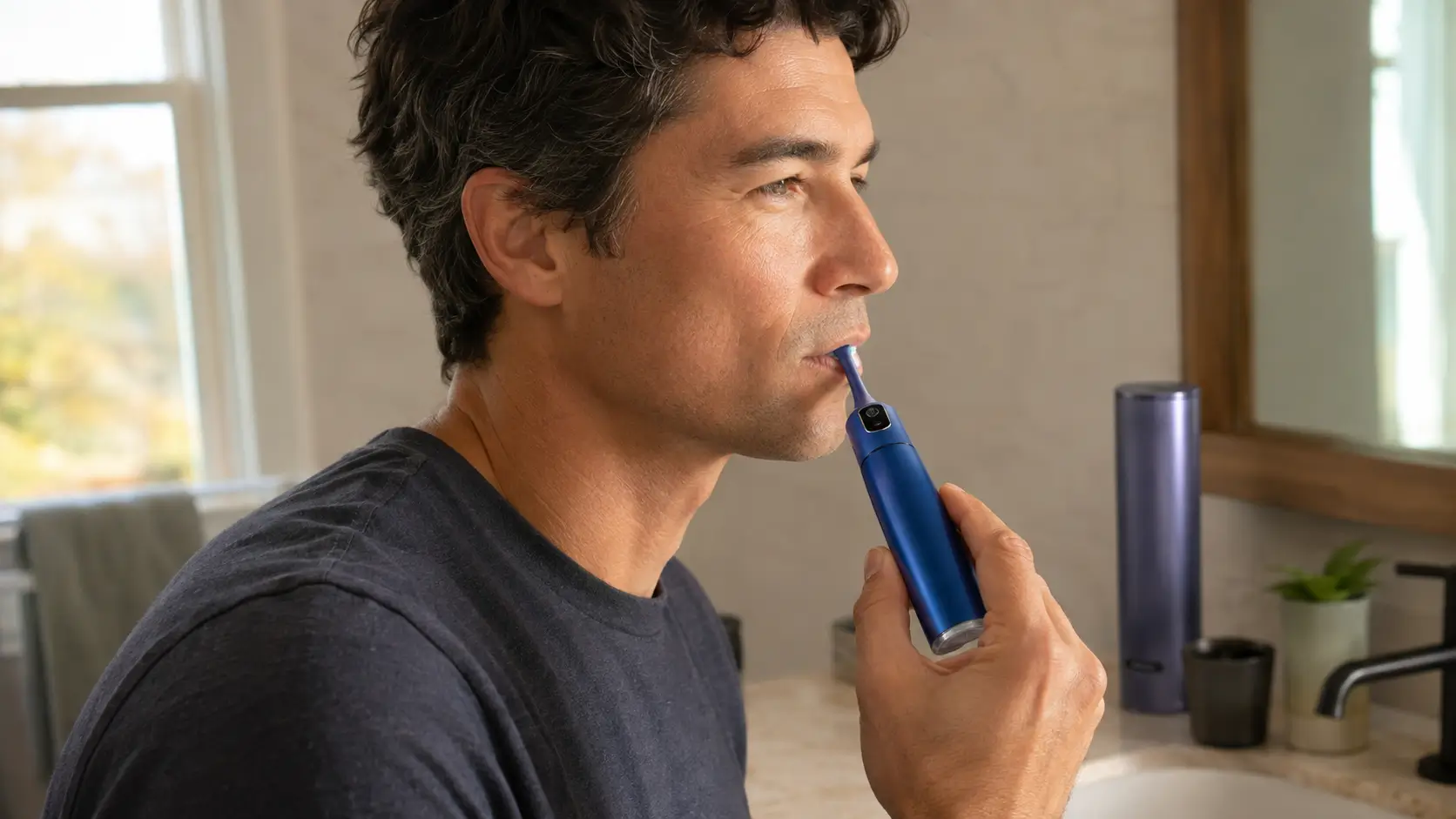
A toothbrush can clean the surface of the teeth, but systematically reaching interdentary spaces remains more difficult.
Dyson proposes a technological solution with CameraJet, presented on September 1, 2026. A miniature camera looks at the teeth, an algorithm searches for spaces between them, and a targeted flush-mouth jet triggers during brushing.
The device is real and pre-commandable in the United States. Its effectiveness compared to a good electric brush accompanied by dental silk remains to be demonstrated independently.
A camera that controls the jet
CameraJet has a 100,000 pixels macro camera placed under its brush head. It analyzes 28 images per second with a machine learning system called Gap Optical Targeting.
When a space between two teeth is detected, the jet can be triggered in less than 100 milliseconds. It projects a short conical spray of mouth rinse rather than a thin continuous high pressure jet.
These characteristics are confirmed in the Dyson Technical Presentation. The manufacturer states that spray can dislodge the plate while being soft for gums and enamel. This claim has not yet been verified in an independent clinical study.
The integrated tank contains 12.5 ml. A station placed on the counter automatically fills it in about three seconds while charging the device.
An unusual electric brush
The head combines soft outer bristles for the line of gums and firmer central bristles for surface stains.
Dyson announces nearly 1,000 oscillations per second. The angle continuously varies so that the bristles continue to move when they meet the surface of the tooth.
An RFID chip tracks the use of each head and sends an alert when a replacement is recommended. The price of spare heads is not yet communicated.
The [official technical sheet] (https://www.dyson.com/oral-care/electric-toothbrush/camerajet/ceramic-pink-set) announces up to 10 days of range, IPX7 water resistance and a replaceable lithium-ion battery. These data are from the manufacturer and should be measured in actual use.
What does the application do?
CameraJet uses Wi-Fi and Bluetooth to communicate with the MyDyson app.
The user can watch a live image of the inside of his mouth and get indications about areas already cleaned. The camera can also be used to look at a tooth or area that is difficult to see, but its image is not a diagnosis.
According to Dyson, the images analyzed to control the jet are neither stored in the device nor sent into the cloud. The Verge describes this local treatment, but the modalities surrounding videos voluntarily recorded in the application still need to be clarified.
Still preliminary results
Dyson states that CameraJet removes up to 72% more plate than some competing electric brushes. There is still no peer-reviewed scientific paper to fully review the protocol supporting this comparison.
The only publicly detailed clinical trial by a media outlet lasted four weeks and brought together 60 people. CameraJet was compared to a manual brush, not a modern electric brush with dental silk.
According to data provided by Dyson to Allure, the plate had decreased by 19% for CameraJet users and by 12% for the manual brush group. The sample is small, the study comes from the manufacturer and its complete results are not published independently.
The president of the British Dental Association recalls in [The Guardian] (https://www.theguardian.com/technology/2026/sep/01/dyson-toothbrush-camera-films-live-footet-inside-mouth) that an expensive device does not replace a regular routine or the advice of a dentist.
Prices and availability in Canada
CameraJet is offered in the United States in blue or pink for $499 US. Both colours are sold at the same price.
The set includes the brush, filling and charging station, two heads, a cable and a carrying case. Dyson also plans to sell its own non-foaming toothpaste and low foam mouth rinse.
The Canadian Dyson website indicates that the product will arrive soon, but does not provide any pricing or schedule. Therefore, it is not necessary to convert the US price or assume that the accessories will be identical in Canada.
The final cost may vary depending on replacement heads, dental products, retailer, promotion, taxes and region.
Limits or Considerations
At US$499, CameraJet costs much more than the combination of a common electric brush and dental silk.
Its handle and station are large. The camera may also be embarrassed by foam; Dyson recommends products without sodium lauryl sulfate or low foam to get a better image.
A liquid jet is not necessarily suitable for each person or interdentary space. Implants, orthodontic devices, restorations and gum diseases may require a specific method recommended by a professional.
Finally, looking at an enlarged image of his mouth may reveal an anomaly, but CameraJet cannot determine whether it is a cavity, infection or injury requiring treatment.
Conclusion
CameraJet transforms a miniature camera into a control sensor: the device looks at the teeth and tries to trigger its jet exactly in the right place.
The integration of brushing, interdental cleaning and imaging is technically original. The replaceable battery and local treatment announced are also interesting choices.
Whether this complexity improves the daily hygiene enough to justify the price remains to be determined. Independent trials comparing CameraJet with a good complete routine will be necessary before considering the product as a true clinical breakthrough.