Unit 42 assigns continuous intrusion tests to several AIs
Unit 42 uses several AIs to continuously test business systems. This is its operation, its unknown price and its main limitations.

Finding a fault once a year is no longer enough when cloud applications and services change every day. A correction can close one door, while a new deployment opens another.
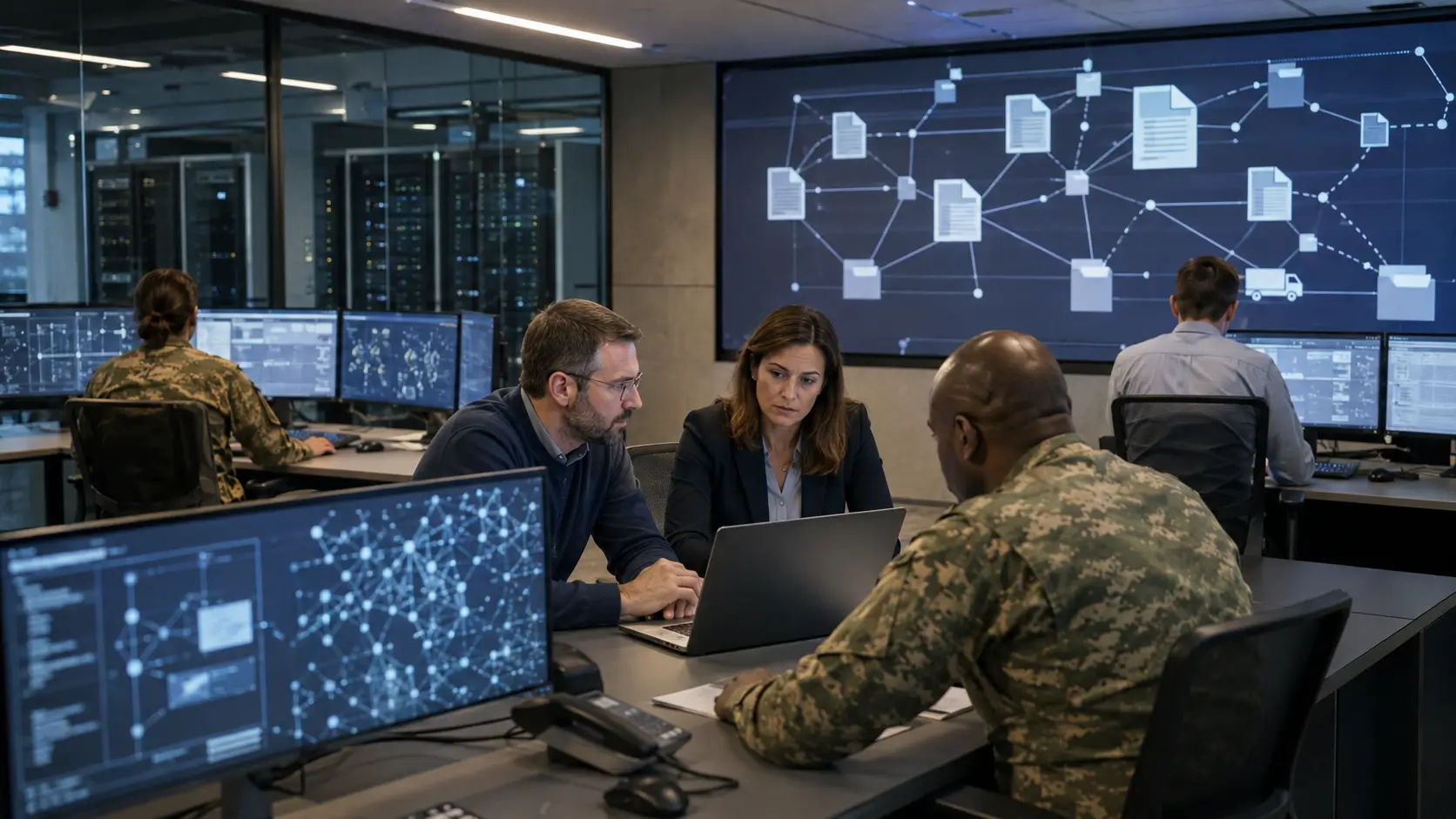
Palo Alto Networks launched on September 22, 2026 Unit 42 Continuous Frontier AI Defense, a service that uses several artificial intelligence models to continually look for weaknesses in an organization's systems. Human specialists must then confirm the results and guide corrections.
It is neither an antivirus nor a guarantee against intrusions. Rather, it is a recurrent intrusion test carried out within an authorized perimeter.
A red team assisted by AI
A traditional intrusion test usually gives a portrait at a specific time. The new service also starts with a reference analysis, but then restarts tests when the environment or application changes.
With the client, Unit 42 first defines the assets that can be tested. His models then try to identify faults and sequence several steps to demonstrate a plausible attack path.
The manufacturer indicates that testing can cover internal or third party web applications, programming interfaces, cloud infrastructure, source code repository and certain network assets.
This scope requires specific limitations. Testing a service owned by a provider without permission, causing excessive burden or manipulating actual data could create an incident rather than prevent it.
Several models with different blind angles
The system combines Claude Mythos 5 d A distribution software chooses the most appropriate model for each task.
According to internal results reported by Axios, no single model found more than 40% of vulnerabilities in complex environments. The discoveries of Mythos and GPT-5.6-Cyber overlapped in less than 10% of cases.
These figures support the multi-model approach, but come from Palo Alto Networks. No independent evaluation has yet reproduced the tests with the same scope, systems and criteria.
IA does not take the final decision alone. Unit 42's offensive experts need to verify that a weakness is actually exploitable, link the stages of an attack and prioritise risks. The service then provides recommendations, including code changes and virtual patches, in the client's tracking tools.
Correct faster, without confusing recommendation and repair
A report that lists hundreds of problems can paralyze a team. The announced interest of the service is to highlight the paths that would actually allow an attacker to reach an important data or system.
The launch release states that over 100 clients participated in evaluations for six months. Exposures were reported to have been found in all, of which 37% were classified as high or critical. These are manufacturer data, without detailed sample or independent audit published.
The service can recommend a virtual fix, a rule that temporarily blocks the operation of a fault. However, its automatic application requires the separate Frontier Virtual Patching product. A virtual patch does not necessarily repair the vulnerable software; it can serve as a transitional protection until a lasting update.
Prices and availability in Canada
Palo Alto Networks states that the service has been offered worldwide since September 22 as an annual subscription. Canada should therefore be eligible, but the contractual terms, data residence and availability of the different models must be confirmed for each organization.
No public price or Canadian tariff was disclosed. Reuters reports that the cost depends in particular on the combination of models chosen.
The final price may also vary depending on the number of assets, the complexity of the environment, integrations, support, scope of testing, related services, the contract and the region.
Limits or Considerations
A system that receives source code, configurations or operating results manipulates very sensitive information. Prior to use, an organization should verify where such data is circulating, how long it is stored, and whether model providers can use it.
Models may lack a flaw, invent a problem, or suggest inadequate correction. Aggressive simulation can also disrupt a service. Human supervision, detailed newspapers, stopping mechanisms and a testing environment remain essential.
Finally, continuous analysis does not replace access management, backups, updates, staff training or an intervention plan. It does not prove that an organisation is safe from a future attack.
Conclusion
Continuing Frontier AI Defense applies the offensive AI to a concrete need: to check repeatedly whether daily changes create new attack paths.
Its multi-model architecture and specialist validation are more credible than a fully autonomous agent. However, its real value will depend on independent results, price, data protection and its ability to improve security without disrupting the tested systems.